Completion of the Urban Design Master's at UAUIM Bucharest – Dissertation: The Augmented City
In September 2022, Bakos Ferencz successfully completed his Master’s in Urban Design at the Faculty of Urbanism of the “Ion Mincu” University of Architecture and Urbanism in Bucharest. One of the main focuses of his studies was the analysis of the Post-Pandemic City, aiming to understand and anticipate how recent events will influence design, interaction, and lifestyles in the cities of the future. The courses, seminars, and debates on this topic gave him the opportunity to evaluate, from various perspectives, how the pandemic has accelerated the need for flexible, intelligent spaces that are better adapted to rapid social and technological changes.
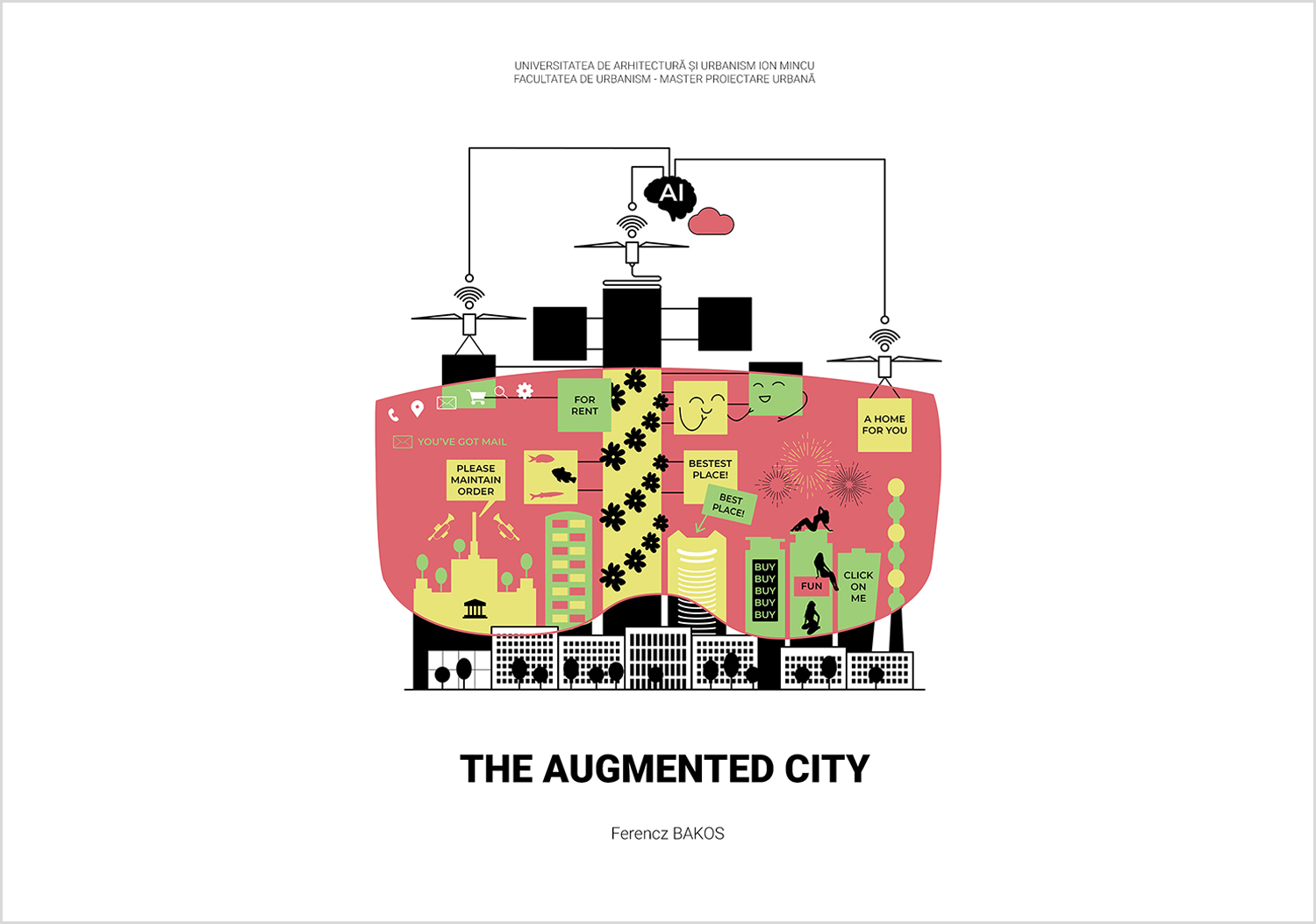
In his dissertation, he delved into the transformation of the city over time through the lens of technological developments, emphasizing the imminent revolution driven by Artificial Intelligence (AI) and Augmented Reality (AR). In his view, these technologies will radically change the way we live, design, and interact with the urban environment. The paper presents the concept of the Augmented City from a perspective that combines scientific research with a critical approach, highlighting the potential of these innovations to reshape traditional principles of urbanism and to generate more dynamic, more intelligent, and more adaptable spaces for the needs of future generations.
The Augmented City
With the pandemic, the world went through a watershed event that calls into question the very belief system and human values. In this context, the imbalances and shortcomings of society only heighten the tension and accelerate the processes of impending change. We are witnessing a third revolution in the development of humanity, after the agrarian and industrial revolutions. This time we are talking about the technological revolution and the changes it brings are certain to be profound, even irreversible.
There is a global trend towards the transformation of cities and communities along the ‘smart’ model, i.e. towards connectivity, sustainability and resource economy. In an ideal context, the smart city uses technology to develop its urban services and offer, responding to the changing needs of society. Technology is manifesting itself in all areas and has a clear objective: to improve the quality of human life.
Even as human life is being transformed by technology, medicine and the development of sensory enhancement technologies, it is the human living space that is undergoing the greatest transformation. The personal, the home and the community, the city are diversifying their functions and therefore their needs. Homes are being printed, objects are being connected and cars are becoming autonomous. Human reality is changing and its very existence is being called into question.
Constantly connected to digital avatars, we seem to lose our sense of reality and of the moment. Or maybe we are just transforming it. With the advent of digital language, the artificial intelligence (AI) of augmented senses and by extension augmented reality (AR) technology, a new reality is possible. The question is: what will everyone do with this new reality?
The idea of virtuality is not new, as research into visualisation and simulation dates back to the early days of using paper and ink sketches for alternative design comparisons. As technology has advanced, so has the way to visualise simulations, but progress is slow because of the difficulties of creating viable simulation models and making them available to users.
Augmented Reality (AR) and Virtual Reality (VR), the evolving technologies that have haunted the tech industry, receiving excessive media attention and colossal growth, are redefining the way we interact, communicate and work together. From consumer apps to manufacturers, these technologies are being used across sectors, delivering huge benefits across multiple applications.
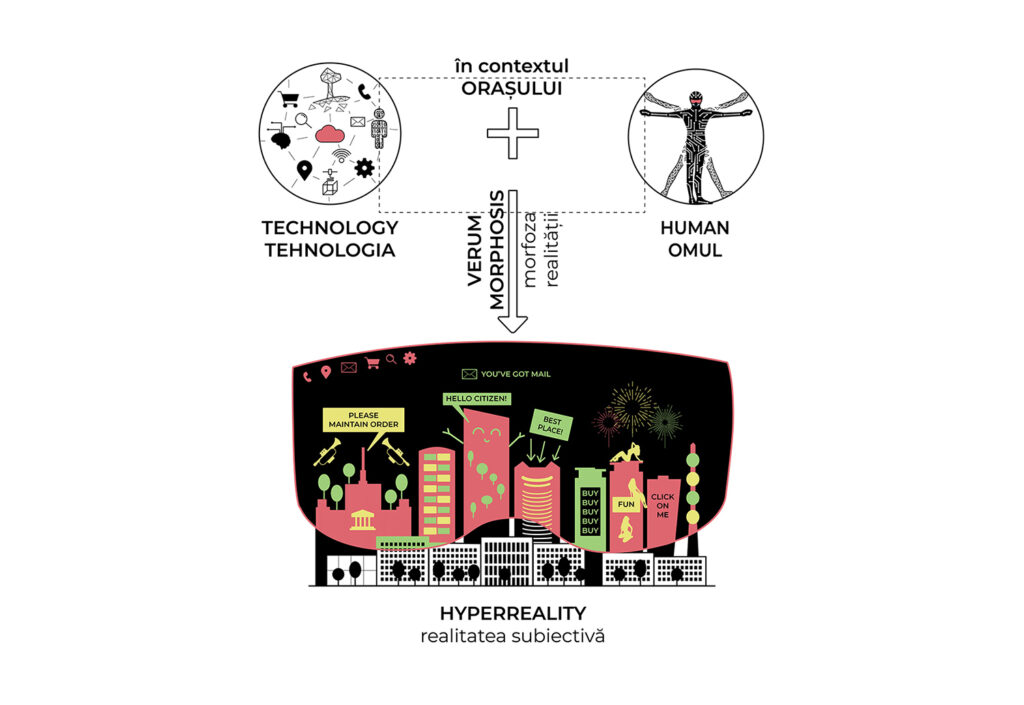
The emergence of the digital society has provoked much discussion within architecture theory. Virtual reality (VR) first attracted the attention of theorists with questions about disembodiment and the possibility of building virtual worlds online. Cyberpunks, gamers and techno-utopians waited for the soul-charging, freeing us from our daily routines as we lay still, connected to our terminals. For a while, it looked like our future would be lived in virtual worlds, but despite the hyperbole and promise, VR hasn’t lived up to expectations. Since then, virtual worlds have found a niche with a significant following in the form of online role-playing games and 3D chat, but have generally been dismissed in favour of the binary engagement between real and virtual – Augmented Reality and Augmented Space.
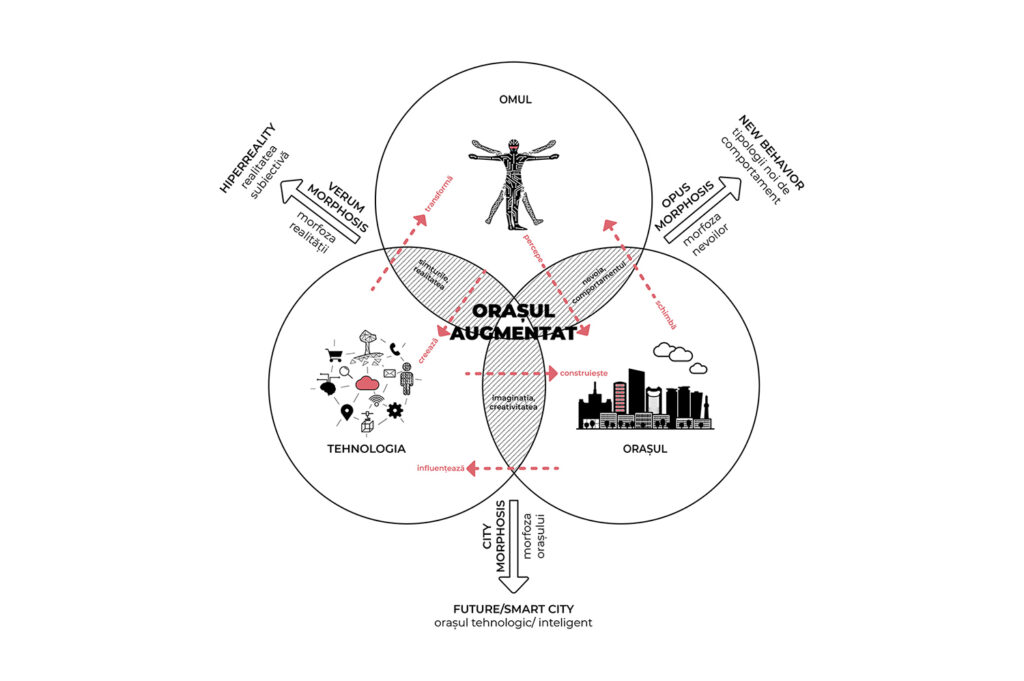
The thesis introduces Augmented Reality (AR) as a framework through which to understand the city and discusses its far-reaching consequences for the built environment and the architectural profession. This augmented space includes wireless location services, ubiquitous computing, tangible interfaces, augmented reality and other emerging technologies unified by their function of reconciling the real and the virtual. While VR has attempted to achieve this by removing us from our physical environment and immersing us in a state of disembodiment, augmented space is dependent on its environment and adds meaning to the city.
This thesis discusses some of the emerging and possible consequences of Augmented Reality for architecture and urbanism in the context of a smart city and augmented space and attempts to present the potential of augmented reality techniques/applications. It aims to update the paradigm of augmented space with new developments in the field of Augmented Reality and to present this technology as a theoretical and practical tool for architects to understand current and future changes in the occupation and construction of the city. In the discussion of urbanism and the networked (connected) society I will argue that the dichotomies between real/virtual, objective/subjective are merging into new forms of hybrid (real/augmented) spaces – a common space for both the augmented human of the future but also for the human who decides to remain unaugmented, anchored in the real.
Augmented Space is already changing our behaviour in the built environment. Wireless networks and mobile devices contribute to the hybrid occupation of public spaces and the deprogramming of architecture. This is the latest technology of the emerging paradigm that has entered the mainstream consciousness and offers perhaps the biggest opportunity yet for architects. AR is still a very young technology and has not been discussed in a sociological and architectural context, but it has the potential to liberate the internet and digital media from the screens on our desks and desksides, changing the way space is built and consumed. Its ability to visualise and create hidden layers and flows within the city raises questions about perception, subjectivity and the construction of identity.
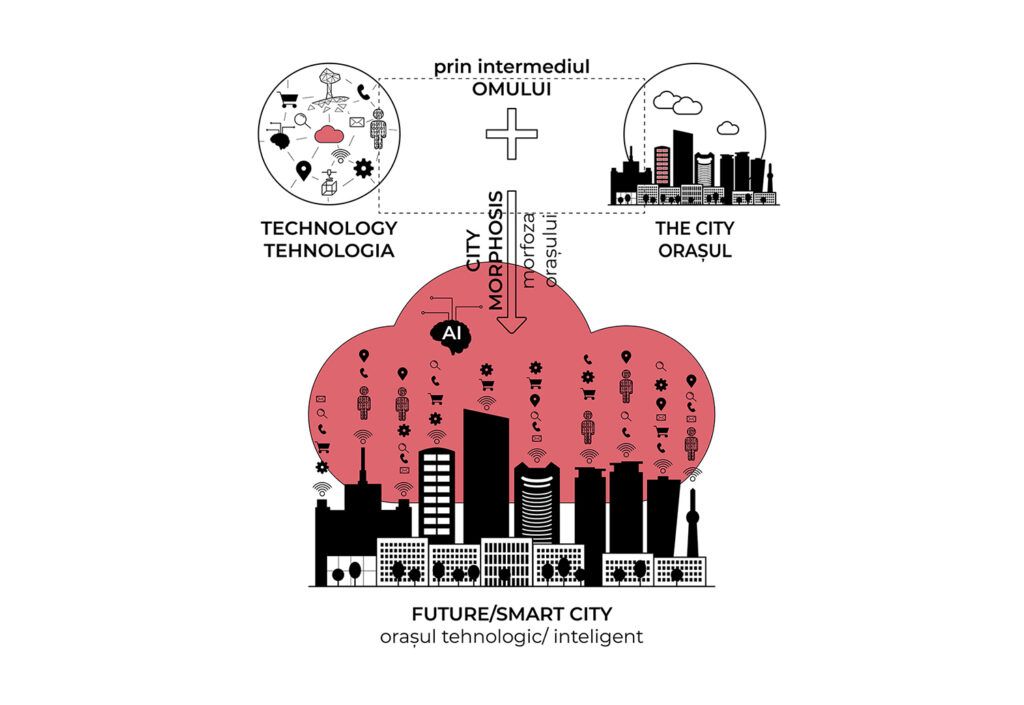
As far as the city is concerned, it will be fundamentally transformed in the context of the change that emerging technologies are producing on humans. With the use of human sensory augmentation as a method of perception and augmented reality technology the city object can become anything and its physical realisation is at the subjective discretion of each individual.
This new technology, together with prototyping and 3D printing could physically transform the city of the future, buildings, streets, needing no identity, no texture, all of which are available to the user to customize according to their own needs and tastes. In this context the city can be anything and everything. This opens up new opportunities for personal expression, interaction with others or association with the idea of community.
The augmented city is already under construction; geo-tagged with location data, notes, blogs, metatags, reviews, photos, memories, videos, sounds, guides, recommendations, routes, areas and transactions constitute its structure and it takes shape and meaning as it is inhabited and accessed. It cannot be viewed with the naked eye, so its true character is inextricably linked to the technology and interface that facilitates its perception, and the mediating agent between person and city. Against the backdrop of these intangible, subjective and rapidly expanding laypersons of the augmented city, I believe that occupying and traversing it will not be a frightening experience, but a very personal one, unique to each individual.
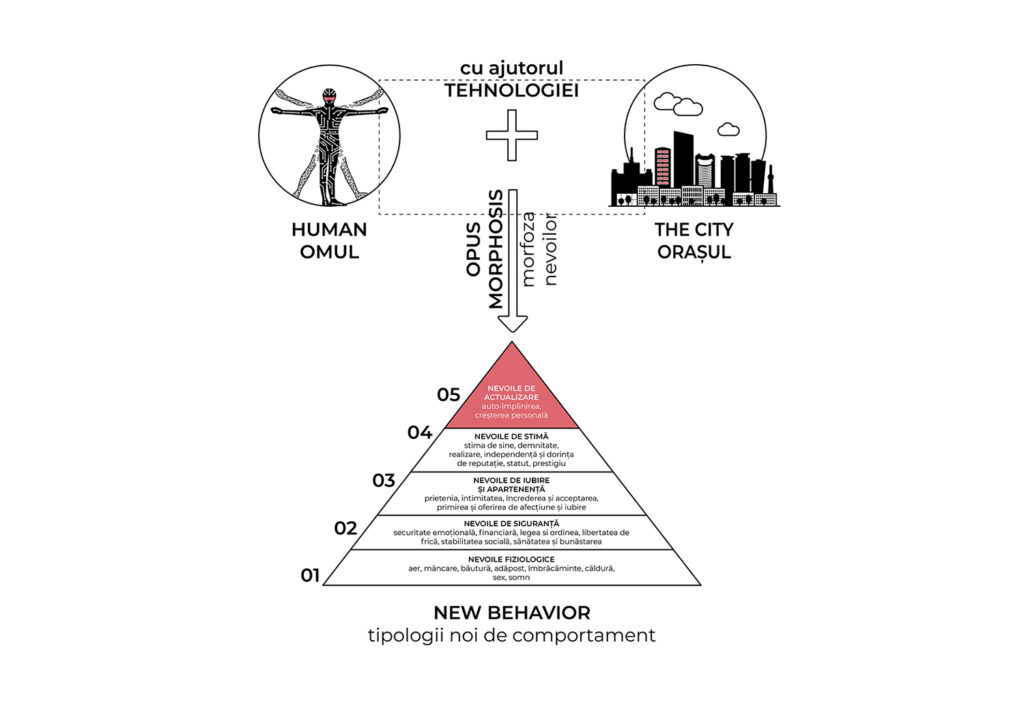
The new technological ubiquity leads to a blending of the public and private spheres, creating a hybrid, augmented environment that does not rely on traditional concepts, but allows experiencing and viewing the city with new eyes. Interaction with all the components of an urban environment is based on new contemporary ways of living, following the digital revolution, which enhances and expands its possibilities. A symbiosis between inhabitant and place is created as never before, leading to a continuous reshaping of architectural space according to the needs of its users. A space that is not singular, but plural, and which is aware that it relies on many more factors than itself; it is part of a hyperconnected whole.
But if cities lose their identity, what is the role of the urban planner, of the architect? Will every man become the architect of his own city? Or will we see architects/urban planners working only in the virtual environment, dressing up as an emperor who wears no clothes?
Regardless of how the Augmented City will shape up in the future, one thing is certain: it must be responsive, intelligent, open-source, creative and last but not least strategic and resilient.
Masterul de Proiectare Urbană finalizat la UAUIM București – Dizertația: Orașul Augmentat
În septembrie 2022, Bakos Ferencz a finalizat cu succes Masterul de Proiectare Urbană în cadrul Facultății de Urbanism a Universității de Arhitectură și Urbanism „Ion Mincu” din București. Unul dintre punctele centrale ale studiilor pe care le-a urmat a fost analiza Orașului Postpandemic, cu scopul de a înțelege și anticipa modul în care evenimentele recente vor influența proiectarea, interacțiunea și stilul de viață în orașele viitorului. Cursurile, seminariile și dezbaterile pe această temă i-au oferit ocazia să evalueze din diverse perspective felul în care pandemia a accelerat nevoia de spații flexibile, inteligente și mai bine adaptate unor transformări sociale și tehnologice rapide.
În dizertație, a aprofundat transformările orașului de-a lungul timpului prin prisma dezvoltărilor tehnologice, subliniind iminenta revoluție adusă de Inteligența Artificială (IA) și Realitatea Augmentată (AR). Aceste tehnologii, în viziunea lui, vor schimba radical modul în care vom locui, vom proiecta și vom interacționa cu mediul urban. Materialul elaborat prezintă Orașul Augmentat dintr-o perspectivă care îmbină cercetarea științifică cu o abordare critică, punând accentul pe potențialul acestor inovații de a remodela principiile tradiționale ale urbanismului și de a genera spații mai dinamice, mai inteligente și mai adaptabile la nevoile generațiilor viitoare.
Orașul Augmentat
Odată cu pandemia, lumea a trecut printr-un moment de cotitură care pune sub semnul întrebării însăși sistemul de valori și credințele umane. În acest context, dezechilibrele și neajunsurile societății nu fac decât să amplifice tensiunea și să accelereze procesele de schimbare iminentă. Suntem martorii celei de-a treia revoluții din evoluția umanității, după revoluțiile agrară și industrială. De această dată, vorbim despre revoluția tehnologică, ale cărei transformări vor fi cu siguranță profunde și, posibil, ireversibile.
Există o tendință globală spre transformarea orașelor și a comunităților în sensul modelului „smart”, adică orientate către conectivitate, sustenabilitate și economie de resurse. Într-un context ideal, orașul inteligent utilizează tehnologia pentru a-și dezvolta serviciile și oferta urbană, răspunzând nevoilor în continuă schimbare ale societății. Tehnologia se manifestă în toate domeniile și are un obiectiv clar: îmbunătățirea calității vieții oamenilor.
Chiar și pe măsură ce viața umană este transformată de tehnologie, medicină și dezvoltarea tehnologiilor de amplificare a simțurilor, spațiul de locuire al omului trece prin cea mai mare transformare. Planul personal, casa și comunitatea, orașul, își diversifică funcțiile și, prin urmare, nevoile. Casele sunt tipărite, obiectele sunt conectate, iar mașinile devin autonome. Realitatea umană se schimbă și însăși existența sa este pusă la îndoială. Conectați în permanență la avataruri digitale, părem să ne pierdem simțul realității și al momentului. Sau poate doar îl transformăm. Odată cu apariția limbajului digital, a inteligenței artificiale (IA) axate pe amplificarea simțurilor și, prin extindere, a tehnologiei realității augmentate (AR), apare o nouă realitate posibilă. Întrebarea este: ce va face fiecare cu această nouă realitate?
Ideea de virtualitate nu este nouă, întrucât cercetările în domeniul vizualizării și simulării datează încă de la primele utilizări ale schițelor pe hârtie și cerneală pentru comparații de proiectare alternative. Pe măsură ce tehnologia a avansat, la fel s-au schimbat și modalitățile de a vizualiza simulările, însă progresul este lent din cauza dificultăților de a crea modele de simulare viabile și de a le pune la dispoziția utilizatorilor. Realitatea Augmentată (AR) și Realitatea Virtuală (VR), tehnologii în evoluție care au atras atenția industriei tech, beneficiind de o expunere mediatică excesivă și de o creștere colosală, redefinesc modul în care interacționăm, comunicăm și colaborăm. De la aplicații de consum la mediul industrial, aceste tehnologii sunt folosite în diverse sectoare, aducând beneficii imense în multiple domenii de aplicare.
Emergența societății digitale a stârnit discuții ample în teoria arhitecturii. Realitatea virtuală (VR) a atras atenția teoreticienilor prin întrebările legate de lipsa corporalității și posibilitatea de a construi lumi virtuale online. Cyberpunkerii, gamerii și tecno-utopiștii au așteptat momentul încărcării sufletului, eliberându-ne de rutinele zilnice, în timp ce am fi rămas nemișcați, conectați la terminalele noastre. Pentru o perioadă, părea că viitorul nostru va fi trăit în lumi virtuale, însă, în pofida hiperbolei și a promisiunilor, VR nu și-a atins obiectivele scontate. De atunci, lumile virtuale și-au găsit o nișă cu un public semnificativ sub forma jocurilor de rol online și a chat-urilor 3D, însă, în general, au fost lăsate deoparte în favoarea interacțiunii binare dintre real și virtual – Realitatea Augmentată și Spațiul Augmentat.
Această teză introduce Realitatea Augmentată (AR) ca un cadru prin care putem înțelege orașul și discută consecințele sale de mare anvergură asupra mediului construit și asupra profesiei de arhitect. Acest spațiu augmentat include servicii de localizare wireless, computing omniprezent, interfețe tangibile, realitate augmentată și alte tehnologii emergente, unificate de funcția lor de a reconcilia realul cu virtualul. În timp ce VR a încercat să realizeze acest lucru prin desprinderea noastră de mediul fizic și imersia într-o stare de lipsă a corporalității, spațiul augmentat depinde de mediul său și conferă sens orașului.
Teza discută câteva dintre consecințele emergente și posibile ale Realității Augmentate asupra arhitecturii și urbanismului în contextul unui oraș inteligent și al unui spațiu augmentat și încearcă să prezinte potențialul tehnicilor/aplicațiilor de realitate augmentată. Se urmărește aducerea la zi a paradigmei spațiului augmentat cu noi evoluții în domeniul Realității Augmentate și prezentarea acestei tehnologii ca instrument teoretic și practic pentru arhitecți, pentru a înțelege schimbările actuale și viitoare în ocuparea și construcția orașului. În discuția despre urbanism și societatea interconectată (networked), voi susține că dicotomiile dintre real/virtual, obiectiv/subiectiv se contopesc în forme noi de spații hibride (reale/augmentate) – un spațiu comun atât pentru omul augmentat al viitorului, cât și pentru omul care alege să rămână neaugmentat, ancorat în real.
Spațiul Augmentat ne schimbă deja comportamentul în mediul construit. Rețelele wireless și dispozitivele mobile contribuie la ocuparea hibridă a spațiilor publice și la deprogramarea arhitecturii. Aceasta este cea mai recentă tehnologie a paradigmei emergente care a intrat în conștiința generală și oferă, poate, cea mai mare oportunitate de până acum pentru arhitecți. AR este încă o tehnologie foarte tânără și nu a fost discutată într-un context sociologic și arhitectural, însă are potențialul de a elibera internetul și mediile digitale de ecranele de pe birourile noastre, schimbând modul în care spațiul este construit și consumat. Capacitatea sa de a vizualiza și crea straturi și fluxuri ascunse în oraș ridică întrebări despre percepție, subiectivitate și construcția identității.
În ceea ce privește orașul, acesta va fi transformat fundamental în contextul schimbărilor pe care noile tehnologii le produc asupra omului. Prin utilizarea amplificării simțurilor umane ca metodă de percepție și a tehnologiei de realitate augmentată, obiectul urban poate deveni orice, iar realizarea sa fizică se află la latitudinea subiectivă a fiecărui individ.
Această tehnologie nouă, împreună cu prototiparea și imprimarea 3D, ar putea transforma fizic orașul viitorului, clădirile, străzile, acestea nemaifiind nevoite să aibă o identitate, o textură, toate fiind disponibile utilizatorului pentru a le personaliza după propriile nevoi și preferințe. În acest context, orașul poate fi orice și toate. Acest lucru deschide noi oportunități de expresie personală, de interacțiune cu ceilalți ori de asociere cu ideea de comunitate.
Orașul augmentat este deja în construcție; geo-marcat cu date de localizare, note, bloguri, metatag-uri, recenzii, fotografii, amintiri, videoclipuri, sunete, ghiduri, recomandări, rute, zone și tranzacții, care îi alcătuiesc structura și prind contur și sens pe măsură ce este locuit și accesat. Nu poate fi observat cu ochiul liber, astfel că adevăratul său caracter este strâns legat de tehnologia și interfața care îi facilitează percepția și de agentul intermediar dintre om și oraș. Pe fundalul acestor straturi intangibile, subiective și în continuă expansiune ale orașului augmentat, consider că a locui și a-l parcurge nu va fi o experiență înspăimântătoare, ci una foarte personală și unică fiecărui individ.
Noua ubicuitate tehnologică duce la o contopire a sferelor publică și privată, creând un mediu hibrid, augmentat, care nu se mai bazează pe concepte tradiționale, ci permite trăirea și privirea orașului cu ochi noi. Interacțiunea cu toate componentele unui mediu urban se bazează pe noi moduri contemporane de viață, urmând revoluția digitală, care le amplifică și le extinde posibilitățile. Se creează o simbioză între locuitor și loc, cum nu a mai existat până acum, ducând la o remodelare continuă a spațiului arhitectural în funcție de nevoile utilizatorilor. Un spațiu care nu este singular, ci plural, și care știe că depinde de mult mai mulți factori decât sine însuși; este parte a unui întreg hiperconectat.
Dar dacă orașele își pierd identitatea, care mai este rolul urbanistului, al arhitectului? Va deveni fiecare om arhitectul propriului său oraș? Sau vom vedea arhitecți/urbaniști care lucrează exclusiv în mediu virtual, îmbrăcându-se ca un împărat fără haine?
Indiferent de felul în care se va contura Orașul Augmentat în viitor, un lucru este sigur: el trebuie să fie receptiv, inteligent, deschis (open-source), creativ și, nu în ultimul rând, strategic și rezilient.