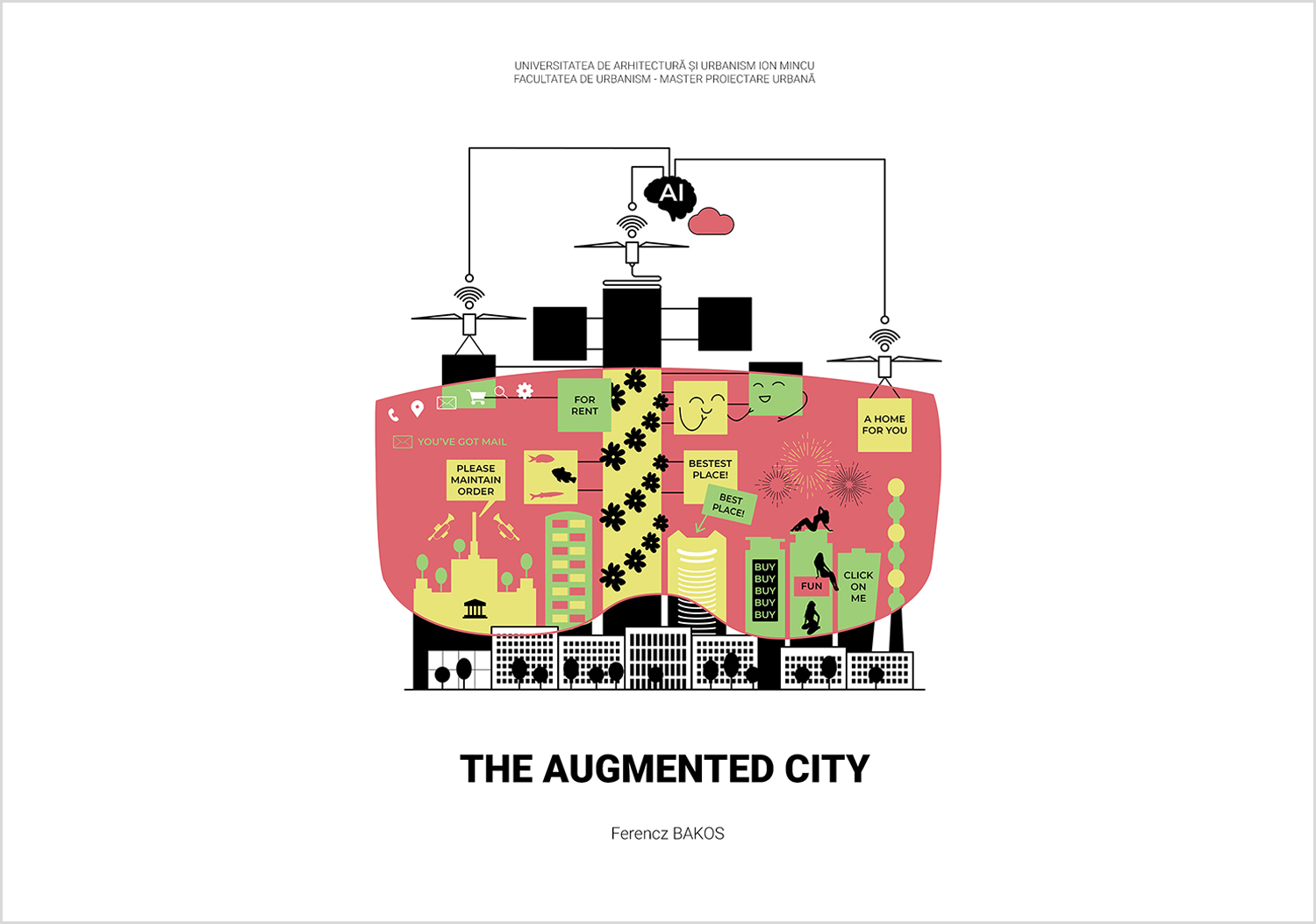
Verum Morphosis or the Birth of Subjective Reality (Hyperreality) was published
The article Verum Morphosis or the Birth of Subjective Reality (Hyperreality) by Ferencz Bakos and coauthor Miruna von Schonberg was published in extenso in:
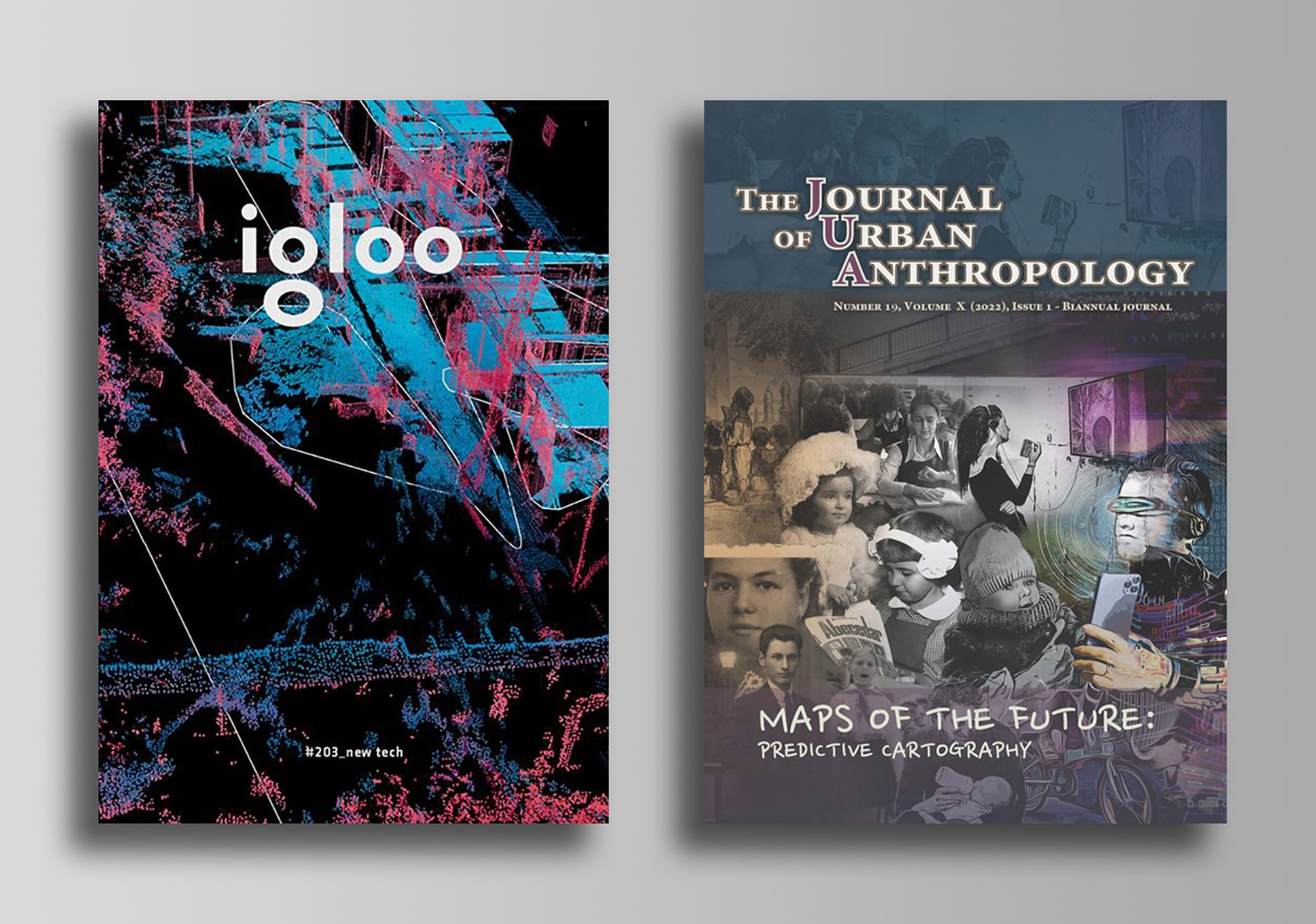
IGLOO #203_new tech, aug-sept 2021, pp. 136-140 and
The Journal of Urban Anthropology (CNCS indexed B category, History and Cultural Studies, ISI indexed with Impact Factor Value of 1.572 based on ICR), Number 19, Volume X (2022), Issue I – Biannual Journal, pp. 13-21
Verum Morphosis or the Birth of Subjective Reality (Hyperreality)
With the COVID-19 pandemic, the world went through a significant event, which calls into question the very system of beliefs and human values. In this context, the imbalances and shortcomings of society only exacerbate the tension and accelerate the processes of imminent change. We are witnessing a third revolution in the development of humanity, after the agrarian and the industrial one. This time we are talking about the technological revolution and the changes it brings are and will be profound, even irreversible.
There is a global trend of transforming cities and communities according to the “smart” model, oriented towards connectivity, sustainability and resource economy. In an ideal context, the smart city uses technology to perfect its services and urban offer, thus responding to the ever-changing needs of society. Technology manifests itself in all areas and has a clear goal: to improve the quality of human life.
Even if human life is transformed and this is due to technology, medicine, the development of technologies to enhance the senses, human living space is experiencing the greatest transformation. The personal one (the home) and the community (the city) diversifies its functions and therefore, its needs. Homes are printed, objects are connected, and cars become autonomous. Man’s reality is changing and its very existence is being questioned. Always connected to digital avatars, we seem to lose our sense of reality and moment. Or maybe we just transform it.
But how could we define reality? According to DEX reality (Latin realitas, -atis.) is explained as a: fact, real thing, which actually exists, state of fact, objective existence and is synonymous with truth, existence, truthfulness and antonym with illusion, imagination, unreal, dream. On the other hand, reality can also be described as the totality of modal representations extracted from the mind from the information provided by the perceptions that humans receive through the five sensory channels: image, sound, taste, smell and tactile sensation.
The reality, especially the one received and represented in images and sounds, gives the subject the impression of an external way, of the world outside him and independent of him. The independence of reality from the subject/observer is understood as the presence of forms and events regardless of subject, as the “existence of nature”, and we will call it objective reality.
Thus, for this objective reality, independent of the subject, to exist, we need three things: an observer (in our case man), the observed object (physical space/city) and a method of observation (the five sensory channels/senses).
With the advent of digital language, artificial intelligence (AI) of augmented senses and implicitly with augmented reality (AR) technology, a new reality is possible. The question is: what will everyone do with this new reality?
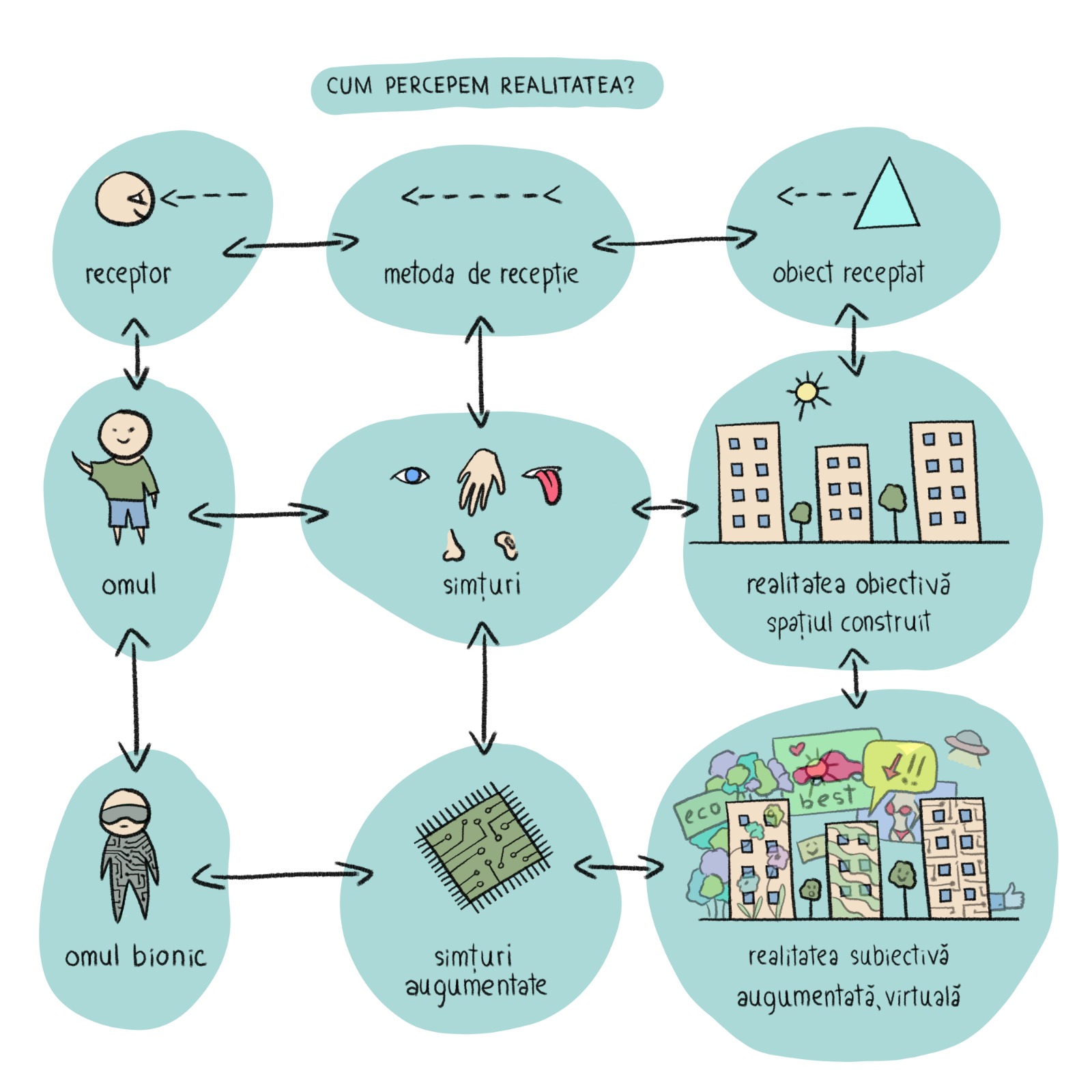
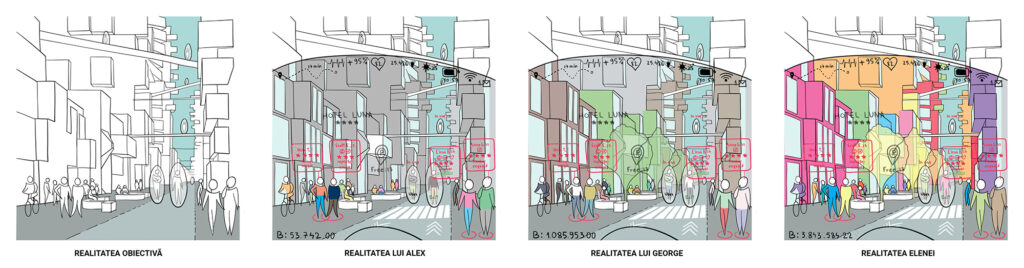
As for the city, it will be fundamentally transformed in the context of the change that these technologies produce on humans. With the use of the augmentation of the human senses as a method of perception, the object of the city can become anything, and its physical concretization is at the subjective latitude of each individual.
This new technology, together with prototyping and 3D printing could physically transform the city of the future, buildings, streets, no longer needing identity, texture, all of which being available to the user to customize them according to their needs and tastes. In this context, the city can be anything and everything. It paves the way for new opportunities for personal expression, interaction with others or association with the idea of community.
Like in a video game, using this augmented layer, much of the overlapped information, even if it will be managed by AI, the amount and clarity/quality of information received will be customizable by each person. Perhaps, like social media accounts, the decision to have a complete and/or detailed picture of this new subjective reality will largely depend on that person’s wealth. But here a question arises: Can reality become a privilege? Or must it remain a right, ensured by constitution to each person?
But, if the cities lose their identity, what is the role of the urbanist, of the architect? Will each man become the architect of his own city? Or we will see architects/urban planners working only in the virtual environment, dressing an emperor who does not wear clothes?
Verum Morphosis sau Nașterea Realității Subiective (Hiperrealitate) a fost publicat
Articolul Verum Morphosis sau Nașterea Realității Subiective (Hiperrealitatea) de Ferencz Bakos și coautoarea Miruna von Schonberg a fost publicat in extenso în:
IGLOO #203_new tech, august-septembrie 2021, pp. 136-140
The Journal of Urban Anthropology (revistă indexată CNCS, categoria B, Istorie și Studii Culturale, indexată ISI cu un Factor de Impact de 1,572 conform ICR), Numărul 19, Volumul X (2022), Ediția I – Revistă bianuală, pp. 13-21.
Verum Morphosis sau Nașterea Realității Subiective (Hiperrealitate)
Odată cu pandemia de COVID-19, lumea a trecut printr-un eveniment major, care pune sub semnul întrebării însăși sistemul de credințe și valorile umane. În acest context, dezechilibrele și neajunsurile societății nu fac decât să agraveze tensiunea și să accelereze procesele de schimbare iminentă. Suntem martorii celei de-a treia revoluții din evoluția umanității, după cea agrară și cea industrială. De această dată vorbim despre revoluția tehnologică, ale cărei schimbări sunt și vor fi profunde, chiar ireversibile.
Există o tendință globală de transformare a orașelor și comunităților conform modelului „smart”, orientat către conectivitate, sustenabilitate și economie de resurse. Într-un context ideal, orașul inteligent folosește tehnologia pentru a-și perfecționa serviciile și oferta urbană, răspunzând astfel nevoilor mereu în schimbare ale societății. Tehnologia se manifestă în toate domeniile și are un obiectiv clar: îmbunătățirea calității vieții umane.
Chiar dacă viața omului se transformă, iar acest lucru se întâmplă din cauza tehnologiei, a medicinei, a dezvoltării tehnologiilor de amplificare a simțurilor, spațiul de locuire uman se află în cea mai mare schimbare. Cel personal (casa) și cel comunitar (orașul) își diversifică funcțiile și, implicit, nevoile. Casele sunt imprimate, obiectele sunt conectate, iar mașinile devin autonome. Realitatea omului se schimbă, iar însăși existența sa este pusă sub semnul întrebării. Mereu conectați la avataruri digitale, părem să ne pierdem simțul realității și al momentului. Sau poate că nu facem decât să o transformăm.
Dar cum am putea defini realitatea? Conform DEX, realitatea (din lat. realitas, -atis) este explicată ca: fapt, lucru real, care există în mod efectiv, stare de fapt, existență obiectivă și este sinonimă cu adevăr, existență, veridicitate și antonim cu iluzie, imaginație, ireal, vis. Pe de altă parte, realitatea poate fi descrisă și ca totalitatea reprezentărilor modale extrase din minte, din informațiile furnizate de percepțiile pe care oamenii le primesc prin cele cinci canale senzoriale: imagine, sunet, gust, miros și senzație tactilă.
Realitatea, în special cea percepută și reprezentată în imagini și sunete, îi dă subiectului impresia unei modalități exterioare, a lumii din afara sa și independentă de el. Independența realității față de subiect/observator se înțelege ca prezență a formelor și evenimentelor indiferent de subiect, ca „existența naturii”, și o vom numi realitate obiectivă.
Astfel, pentru ca această realitate obiectivă, independentă de subiect, să existe, avem nevoie de trei elemente: un observator (în cazul nostru, omul), obiectul observat (spațiul fizic/orașul) și o metodă de observare (cele cinci canale senzoriale/simțurile).
Odată cu apariția limbajului digital, a inteligenței artificiale (IA) axate pe amplificarea simțurilor și, implicit, a tehnologiei realității augmentate (AR), o nouă realitate devine posibilă. Întrebarea este: ce va face fiecare cu această nouă realitate?
Cât despre oraș, acesta va fi transformat fundamental în contextul schimbării pe care aceste tehnologii o produc asupra omului. Prin folosirea amplificării simțurilor umane ca metodă de percepție, obiectul orașului poate deveni orice, iar concretizarea sa fizică ține de latitudinea subiectivă a fiecărui individ.
Această tehnologie nouă, împreună cu prototiparea și imprimarea 3D, ar putea transforma fizic orașul viitorului, clădirile, străzile, care nu ar mai avea nevoie de identitate, textură, toate fiind disponibile utilizatorului pentru a le personaliza după propriile nevoi și gusturi. În acest context, orașul poate fi orice și toate, deschizându-se noi oportunități de expresie personală, de interacțiune cu ceilalți sau de asociere cu ideea de comunitate.
Ca într-un joc video, folosind acest strat augmentat, o mare parte din informația suprapusă, chiar dacă va fi gestionată de IA, cantitatea și claritatea/calitatea informației recepționate vor fi personalizabile de fiecare persoană în parte. Poate, asemănător conturilor de social media, decizia de a avea o imagine completă și/sau detaliată a acestei noi realități subiective va depinde într-o bună măsură de avuția acelei persoane. Dar apare o întrebare: Poate deveni realitatea un privilegiu? Sau trebuie să rămână un drept, asigurat prin constituție fiecărei persoane?
Dar, dacă orașele își pierd identitatea, care mai este rolul urbanistului, al arhitectului? Va deveni fiecare om arhitectul propriului său oraș? Sau vom vedea arhitecți/urbaniști care lucrează numai în mediul virtual, îmbrăcând un împărat care nu poartă haine?